



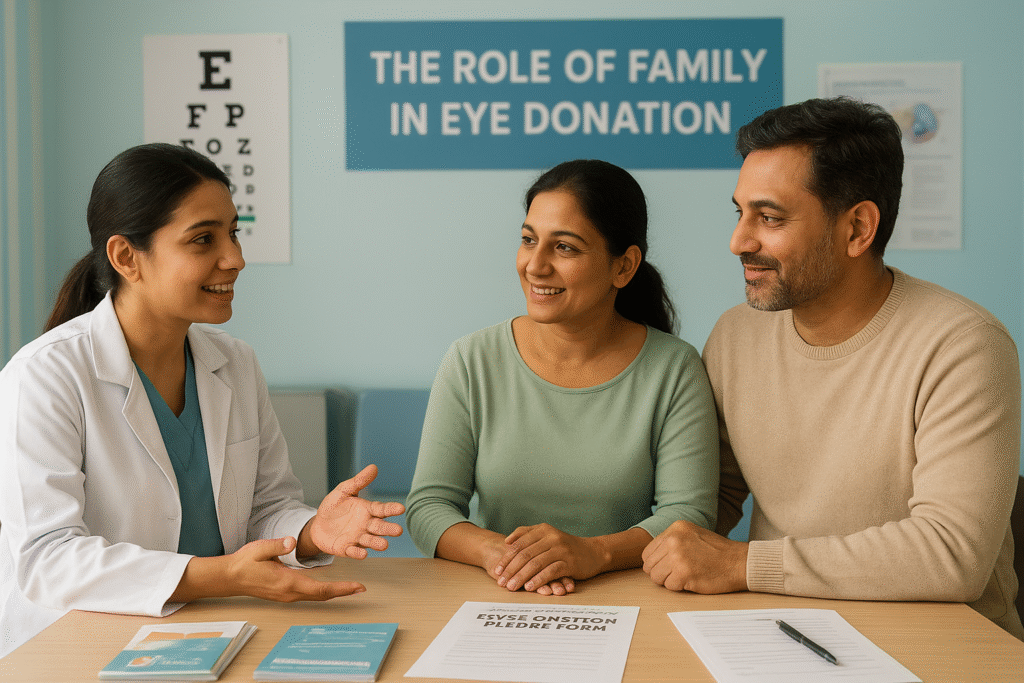
The Role of family in eye donation is critical because families influence the willingness of individuals to pledge their eyes and follow through with the donation process. The decision to donate eyes is a noble act that restores vision and brings hope to countless individuals. Understanding this role can encourage more people to consider eye donation and support the cause effectively, ensuring that the donor’s wishes are respected and acted upon at the right time.
Table of Contents
Why the Role of Family in Eye Donation Matters
Families play more than just a supportive role in eye donation. They play an essential part in ensuring that the wishes of the donor are respected. When a family understands the significance of eye donation, they are more likely to consent at the crucial time, thereby giving someone else the gift of sight. According to experts, the presence of family support can increase the number of successful donations, making awareness at the household level extremely important. The importance of family support in eye donation is evident, as families help remove doubts, clarify misconceptions, and provide encouragement, ensuring the donation process is carried out smoothly. Families also serve as advocates, spreading awareness about eye donation within their communities. Their positive attitude and informed decisions can inspire others to consider pledging their eyes, creating a ripple effect of generosity and hope.
How Family Support Influences Eye Donation Decisions
The importance of family support in eye donation cannot be overstated. A family that understands the donation process can guide each other and take timely action. Emotional support, encouragement, and shared understanding of the humanitarian impact of eye donation significantly influence whether a person’s pledge turns into an actual donation.
Studies indicate that families who discuss eye donation openly are more likely to honour their loved one’s wishes. This highlights the need for awareness programs that target both individuals and their families to maximise impact.
Benefits of Understanding the Role of Family in Eye Donation
- Reducing confusion or hesitation during emergencies.
- Encouraging more people to pledge their eyes.
- Creating a supportive environment that respects the donor’s intentions.
- Spreading awareness about eye donation within communities.
- Strengthening family bonds through shared humanitarian values.
The presence of supportive families can transform the way society perceives eye donation, ultimately helping more people regain their sight.
When and How Families Can Support Eye Donation
Families often wonder about the best time to discuss eye donation. The key is to initiate the conversation early, ideally before making any legal pledges. Explaining the benefits, such as restoring vision to someone in need, helps family members appreciate the significance of eye donation. The importance of family support in eye donation becomes evident when families proactively prepare for the donation process and guide each other in navigating the necessary formalities.
10 Pro Tips
- Start the Conversation Early: Discuss eye donation openly with all family members to ensure everyone understands the process.
- Educate About the Benefits: Explain how eye donation can restore vision and change lives.
- Address Myths and Misconceptions: Clarify that eye donation does not harm the body or interfere with funeral rituals.
- Document Donor Wishes: Encourage family members to record their consent for eye donation.
- Attend Awareness Programs Together: Participate in local campaigns to stay informed and motivated.
- Support Each Other Emotionally: Family members can provide comfort and reassurance when difficult decisions arise.
- Prepare Necessary Legal Documents: Ensure identification and medical records are ready for a smooth process.
- Encourage Peer Discussions: Talk to friends and relatives about the benefits, to expand awareness.
- Celebrate Acts of Donation: Acknowledge and honour family members who choose to donate eyes, fostering a culture of compassion.
FAQs
1. What is the Role of Family in Eye Donation?
Families play a crucial role in eye donation by supporting the donor’s wishes, providing guidance, and ensuring that the process is carried out smoothly. Families influence decisions and can encourage timely consent. Their involvement is essential for successful eye donation.
2. How does the importance of family support in eye donation affect the donation process?
Family involvement plays a vital role in the success of eye donation as they assist in handling legal, medical, and emotional aspects of the process. Supportive families increase the chances of donations being carried out smoothly and effectively.
3. Can one donate eyes without family consent?
While individual consent is crucial, family consent often plays a decisive role. Hospitals and eye banks usually consult families to respect traditions and ensure smooth coordination.
4. How can families help overcome myths about eye donation?
Families can discuss facts and reassure each other about common misconceptions. Education reduces hesitation and encourages more pledges.
5. What steps should a family take when a donation opportunity arises?
Families should immediately contact the hospital or eye bank, confirm consent, and provide necessary information. Quick action ensures the donation is successful.
Conclusion
The role of family in eye donation is fundamental for promoting this life-changing act. Families not only guide and support donors but also help overcome barriers and misconceptions. Understanding the importance of family support in eye donation ensures that more individuals can pledge their eyes and contribute to a brighter future. By educating families, initiating conversations early, and working with Akshay Netra, we can make a significant impact in restoring vision and changing lives. Remember, family support is not just helpful; it is essential for the success of every eye donation initiative.
