



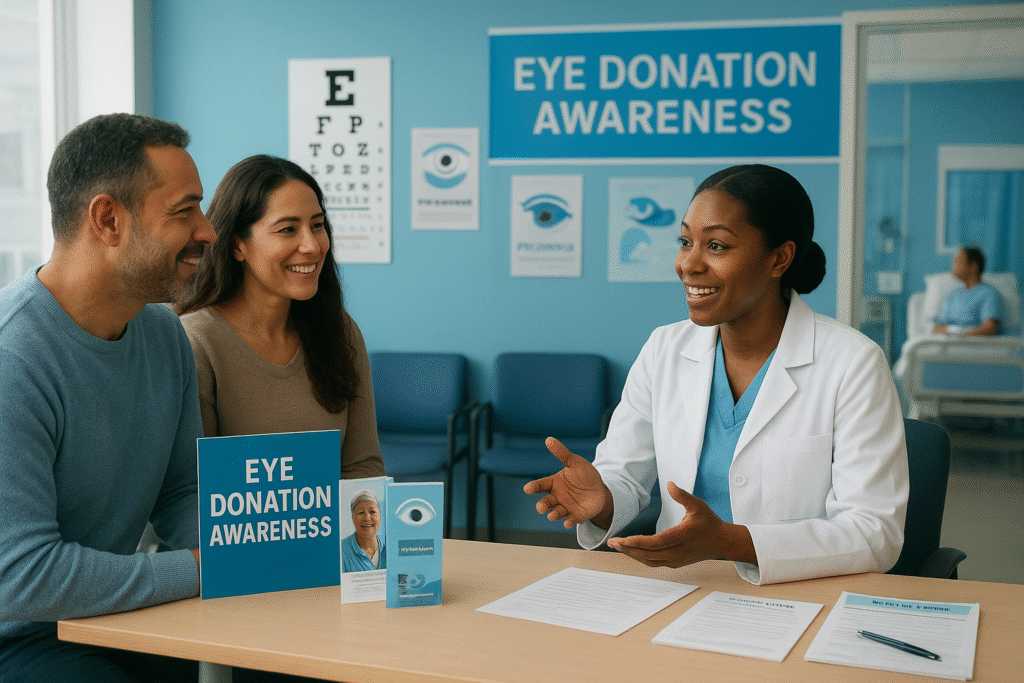
Real-life eye donation experiences help bring awareness to the impact of eye donation. By sharing genuine stories of donors and recipients, we not only spread knowledge but also highlight the life-changing possibilities that come with this act of kindness. Every person who pledges to donate becomes part of a chain that restores vision, renews hope, and strengthens families.
Eye donation continues to be one of the most meaningful contributions a person can make to society. At Akshay Netra, you can learn more about how such stories inspire others to pledge and take action. This blog dives deep into the human side of eye donation, where compassion and medical science meet to give someone the priceless gift of sight.
Table of Contents
Who Shares Real-Life Eye Donation Experiences?
Behind every cornea transplant, there is a powerful story. Families who consent to eye donation during emotional times often find peace in knowing that their loved one lives on by helping someone else see. Recipients, on the other hand, describe the moment of restored sight as life-transforming. By collecting and retelling these eye donation success stories, awareness campaigns build trust and confidence within communities. Reading about genuine stories inspires others to pledge their eyes and break through myths or fears that hold them back. Each experience adds a personal touch to the larger cause, proving that eye donation is not just a medical procedure but an emotional journey.
What Role Do Eye Donation Success Stories Play in Awareness?
Inspiring eye donation stories create a bridge between potential donors and beneficiaries. For many families, reading about others who went through similar experiences becomes the deciding factor to say yes. These stories are not just statistics. They show the real faces of children, parents, and elderly individuals who regained vision because someone chose to donate.
Why Do People Share Real-Life Eye Donation Experiences?
People often share eye donation stories to give back to the community. Recipients want others to know how their lives improved after surgery, while donor families find strength in knowing their loved one continues to make a difference.
Sharing these experiences also has a ripple effect. One inspiring story may lead to several new pledges. Communities become more open to donation when they hear honest accounts of lives changed. This process creates awareness not through lectures, but through heartfelt stories that are relatable and memorable.
How Do Eye Donation Success Stories Motivate Families?
Families often hesitate when approached about eye donation. Hearing or reading stories of successful donations helps them realise the long-term value of saying yes. They understand that their choice could give someone else the chance to see a loved one, attend school, or continue working.
Real accounts help families connect emotionally with the cause. Instead of focusing only on grief, they begin to see hope. By highlighting positive outcomes, these stories provide reassurance and build trust.
Benefits of Sharing Eye Donation Stories
Sharing real-life eye donation experiences has several advantages. Firstly, they reduce misconceptions about the process, making more people comfortable with pledging. Secondly, they showcase the deep emotional satisfaction that families of donors feel. Lastly, these experiences remind society that donation is not only about science but also about humanity.
When people hear how someone’s vision was restored, they connect emotionally, which is far more powerful than medical facts alone. In this way, storytelling becomes a tool for awareness and change.
10 Pro Tips
- Start conversations early – Talk to your family about your decision before a crisis arises.
- Read real stories – Go through inspiring experiences on Akshay Netra to understand the impact.
- Attend awareness events – Community gatherings can help clarify doubts.
- Debunk myths – Share facts that donation does not affect appearance or religious beliefs.
- Involve youth – Encourage younger family members to learn and pledge.
- Highlight success stories – Use real-life cases to inspire others to act.
- Keep pledge cards accessible – Let family members know where your donor card is.
- Spread on social media – Share articles and links to Akshay Netra.
- Work with local eye banks – Stay connected with trusted institutions.
- Lead by example – Pledge your eyes first, and others will follow.
FAQs
Q1. What are some examples of real-life eye donation experiences?
These are stories from donor families and recipients that show how eye donation changes lives. Families often feel peace knowing their loved one’s vision lives on, while recipients describe it as a second chance at life. Such examples motivate others to pledge.
Q2. How do eye donation success stories inspire others?
They create awareness by showing real people who regained vision after a transplant. Such stories encourage hesitant families to say yes and help increase the number of successful donations worldwide.
Q3. Does eye donation affect funeral rituals?
No, eye donation is a simple procedure and does not interfere with funeral arrangements. Families can proceed with rituals as planned, without delay or visible changes.
Q4. Can anyone pledge to donate eyes?
Most people can pledge regardless of age, gender, or health conditions. Certain medical issues may restrict donation, but the majority of individuals are eligible.
Q5. Where can I learn more about eye donation?
You can visit Akshay Netra to read detailed guidance, inspiring stories, and practical steps for pledging.
Conclusion
The power of real-life eye donation experiences lies in their ability to inspire action. These stories bring forward the emotions, challenges, and victories of both donors’ families and recipients. Meanwhile, eye donation success stories play a critical role in motivating families and individuals to pledge. By reading and sharing stories through Akshay Netra, we can break myths, build trust, and encourage more people to become part of this noble mission. Eye donation is more than a medical act; it is a gift of vision, a gift of hope, and a gift of life.
