


Eye donation myths and facts often leave people with doubts, hesitation, and even fear. While eye donation has the power to restore sight and change lives, several misconceptions prevent individuals from pledging. Understanding the truth can help break these barriers and encourage more people to come forward for this noble cause.
At Akshay Netra, awareness campaigns and educational resources are designed to clear these doubts and highlight how one selfless act can bring light to someone’s life. Let’s explore the myths, facts, and truths surrounding eye donation in detail.
Table of Contents
What Are Eye Donation Myths and Facts ?
When discussing common misconceptions about eye donation, it is important to separate belief from reality. Many assume eye donation is complicated or reserved for a certain age group. In reality, almost anyone can pledge to donate their eyes, regardless of gender, religion, or age. One major fact is that only the cornea is transplanted, not the entire eye. The procedure is safe, performed only after death, and causes no disfigurement. Myths about eye donation, such as it affecting vision in the next life or being restricted by medical conditions, are entirely false. To know more about the simple pledge process, you can visit Akshay Netra.
Why Do People Believe in Myths about Eye Donation?
The existence of misconceptions around eye donation is often rooted in cultural, social, and religious traditions. Many communities pass on stories that discourage families from pledging, such as the fear of improper rituals or incomplete funeral rites.
However, none of these beliefs is supported by medical or religious authorities. Eye donation is accepted across all major faiths, and most spiritual leaders even encourage it as an act of kindness. The real reason myths continue to spread is the lack of awareness.
How Do Eye Donation Myths and Facts Impact Awareness Campaigns?
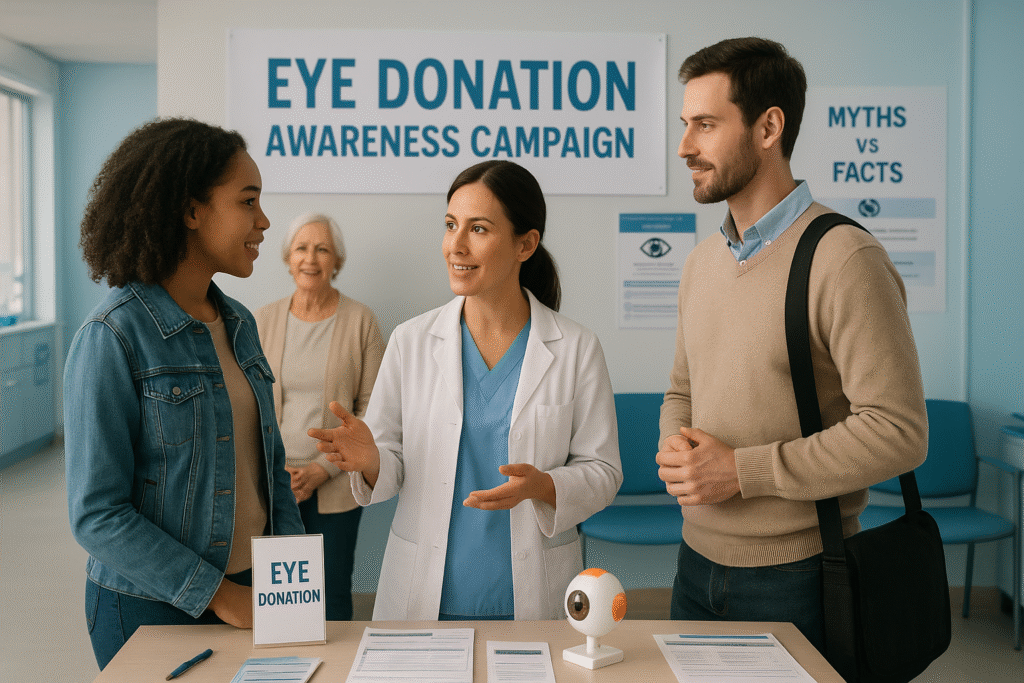
Awareness programs are designed to highlight the advantages of eye donation, but misconceptions about donating eyes often slow progress. When people are misinformed, they hesitate to pledge, leading to a shortage of corneal donations. By clarifying the facts, campaigns can encourage more people to come forward. One powerful advantage of eye donation is that a single donor can restore vision to two people. Highlighting this benefit, while breaking myths, makes campaigns more impactful and ensures the message reaches a wider audience. Educating families and communities about the simplicity and safety of the donation process can build trust and motivate action. Every pledge brings hope, creating a lasting legacy that can transform lives.
What Are the Benefits of Knowing Myths about Eye Donation?
Learning the truth behind false beliefs about eye donation can encourage individuals to make informed decisions. When families understand that donation causes no harm to rituals, no delay in funerals, and no pain to the donor, they are more likely to consent.
In addition, spreading the correct knowledge in schools, colleges, and communities ensures the younger generation grows up free from misconceptions. They become advocates for pledging, thus increasing awareness and participation in eye donation drives.
Pro Tips
- Start with Education – Learn the facts about eye donation from authentic sources.
Knowledge helps remove fear and makes conversations about donation easier. - Involve Families Early – Share your decision with family to ensure support after death.Family consent is crucial, so early discussions create trust and acceptance.
- Talk to Doctors – Medical professionals can clear doubts about health conditions.
A short consultation can help you understand eligibility and the real process. - Join Awareness Drives – Participate in community eye donation campaigns.
Being part of a drive motivates others and spreads awareness faster. - Promote Success Stories – Share real stories of recipients to inspire others.
Success stories prove the life-changing impact of a single donation. - Respect Religious Guidance – Highlight statements from faith leaders supporting donation.
Religious acceptance helps communities feel secure and motivated to pledge. - Educate Students – Schools and colleges are strong platforms for awareness.
Young people often influence families, making them powerful advocates. - Dispel Superstitions – Use facts and science to challenge cultural fears.
Logical explanations build confidence and replace doubts with clarity. - Take the Pledge – Signing a pledge form motivates others to do the same.
Your action becomes an example and encourages a chain of pledges.
FAQs
Q1. What are some common eye donation myths and facts everyone should know?
The most common myth is that the whole eye is removed, but the fact is only the cornea is transplanted. Another myth is that age or health issues prevent donation, which is not true. Anyone can pledge regardless of age.
Q2. Why do people still believe in myths about eye donation?
People believe in myths due to cultural superstitions and lack of information. Many are not exposed to accurate medical knowledge. Awareness programs and verified platforms help break these misconceptions.
Q3. How can one pledge their eyes?
The process is simple and involves filling out a pledge form online. Akshay Netra guides individuals step by step. Informing the family about the decision is equally important.
Q4. Who can benefit from eye donation?
Patients suffering from corneal blindness are the direct beneficiaries. With a single donation, two people can regain their sight. This life-changing act provides hope and dignity to recipients.
Q5. Does eye donation delay funeral rituals?
No, the process is quick and completed within a few hours. Funerals and rituals are not delayed. Families can proceed with their traditions respectfully and without hindrance.
Conclusion
The subject of eye donation myths and facts proves how misinformation can hold back a life-changing act. At the same time, understanding the myths about eye donation allows families to make compassionate decisions based on truth.
By spreading awareness, promoting education, and taking pledges through Akshay Netra, we can ensure that more lives are restored with the gift of sight. Breaking myths is not just about correcting beliefs; it is about giving someone the chance to see the world again.
