



Eye bank functioning explained is the starting point for anyone who wants to know how donated eyes are collected, preserved, evaluated, and distributed to help restore someone’s sight. This blog breaks everything down in a simple, human way so that readers can understand the complete journey of an eye after donation and how Akshay Netra spread awareness that leads to sight restoration.
Table of Contents
What is eye bank functioning explained ?
Eye banks are specialized centers that handle everything from collection to preservation of corneal tissues. In this process, the tissue storage method plays a major role. Eye banks follow strict protocols to ensure that every donated cornea remains safe, sterile, and usable for transplant. They operate with trained teams who collect eyes within hours of passing, verify medical history, and store tissues in controlled environments. Eye banks also work with hospitals, NGOs, and awareness platforms like Akshay Netra to coordinate donations and bring transparency to the system. Through these careful steps, they help thousands regain vision every year.
How does the cornea preservation process work?
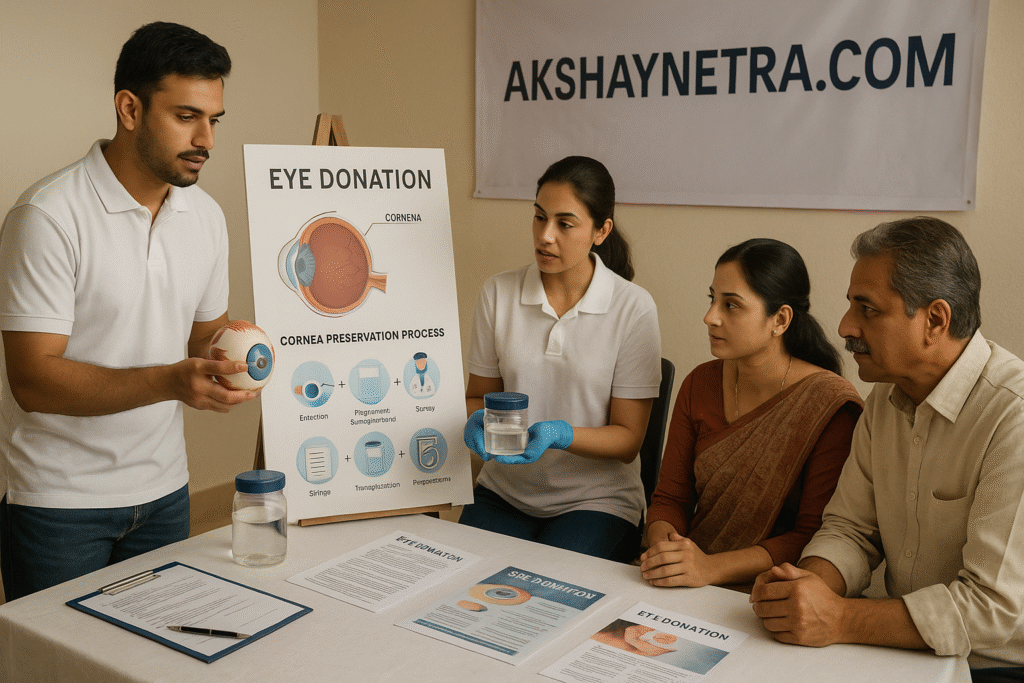
The storage procedure ensures the donated cornea stays healthy until a surgeon transplants it. This involves placing the cornea in a preservation medium that maintains cell health for several days. Technicians constantly monitor temperature and quality to prevent contamination. Eye banks decide whether the cornea is suitable for optical use or only therapeutic use. Proper preservation increases the success rate of transplant surgeries. Many awareness efforts by Akshay Netra help families understand how scientific preservation protects the gift of sight.
Why understanding eye banks matters
Understanding how an eye bank works builds trust and encourages more people to pledge their eyes. When families know what happens after donation, they feel reassured that the tissues are treated with care. One important step discussed in many awareness programs, including those by Akshay Netra, is the cornea preservation process which allows tissues to stay viable long enough for doctors to plan surgeries. Learning about screening, testing, and transparency also boosts confidence in the system. This knowledge helps reduce myths and motivates more communities to contribute to sight restoration.
Importance of transparency in donation systems
Transparent communication is a key part of proper donation handling. Eye banks maintain records, follow strict guidelines, and ensure every cornea goes to a patient who needs it most. This includes fair allocation, unbiased selection, and ethical handling of tissue. Many people understand these steps better through awareness platforms Akshay Netra. In this section, explaining the detailed internal process is essential because it includes scientific preservation methods along with the emotional responsibility of serving donors honorably. When people learn these details, confidence naturally grows.
Benefits and impact of eye banks on patient lives
Eye banks play a significant role in helping doctors perform vision restoring surgeries. Through tissue evaluation, preservation, and distribution, patients suffering from corneal blindness can get a new chance at life. In one of the paragraphs of this section we mention eye bank functioning explained to emphasize how the complete process supports thousands who cannot see due to damaged corneas. Eye banks also help maintain a national registry of donated tissues which improves planning. Their services also support hospitals in rural areas where resources are limited but the need for vision care is high.
When is the cornea preservation process used in eye banks?
The storage and protection method for corneal tissue is used immediately after eye retrieval to maintain its quality. This step becomes essential when the cornea needs to be transported to another city or kept safe for a few days before surgery. Specialists ensure the tissue remains clear, uncontaminated, and healthy enough for transplant. Without this scientific preservation method, thousands of potential transplants would not be possible. Every donated cornea undergoes this careful process before it reaches the operation theater for a successful surgery.
10 Pro Tips to Understand and Support Eye Donation
- Learn the full donation journey
Understand how collection, testing, and preservation work so you can explain it to others with confidence. - Discuss your wish with family
Families give final approval, so sharing your decision ensures your pledge is honored. - Save the emergency contacts of eye banks
Quick action after passing is crucial for tissue viability. - Stay updated through awareness platforms
Akshay Netra offers simple information that makes the donation system easier to understand. - Attend local awareness camps
They help you learn the process in real-life settings and clarify misconceptions. - Motivate others through personal stories
Sharing how donation helps someone recover sight inspires others to pledge. - Read about corneal blindness
Knowing real patient struggles helps people realize how valuable donation is. - Understand the procedure is non disfiguring
The process is carried out respectfully and does not harm the donor’s appearance. - Learn the time sensitivity
Eye retrieval must happen quickly, and preservation helps extend viability. - Support ethical donation systems
Encourage transparent and responsible practices in your community.
FAQs
1. What does eye bank functioning explained mean in simple words?
It means understanding how an eye bank collects, preserves, tests, and distributes donated eyes. Each step is performed by trained professionals to ensure safety. This clear knowledge helps build public trust and encourages more donations.
2. What is the role of the cornea preservation process in donation?
It protects the cornea and keeps it healthy until transplant. This ensures that surgeons receive usable tissue for restoring vision. Without proper preservation, the success rate of surgeries would be much lower.
3. Who can donate their eyes?
Any healthy person, regardless of age, can donate after passing. Eye banks check medical history to decide whether the tissue is suitable. Even people with eye problems may still donate, depending on the condition.
4. How quickly must eyes be donated?
Eyes should be collected within a few hours after passing to maintain tissue quality. The faster the retrieval, the healthier the cornea remains. Preservation helps extend its usability.
5. Is eye donation safe and respectful for the donor?
Yes, the process is performed gently and with complete respect. It does not disfigure the face or cause pain because it happens after passing. Families can hold traditional rituals without any issue.
Conclusion
In summary, the journey of understanding donation begins with knowing how eye bank functioning explained helps people see the entire process with clarity. The cornea preservation process is a vital part of ensuring donated corneas remain healthy for transplant. Akshay Netra. continue to spread awareness and encourage responsible donation. By understanding the system, trusting the procedures, and supporting awareness, every reader can help bring the gift of sight to those who need it most.
