


The question of age & eligibility for eye donation often arises among those who wish to contribute to restoring sight. Many people want to donate their eyes but are unsure about who can or cannot donate. Understanding the right age, medical conditions, and legal aspects helps bring clarity. Through this awareness, Akshay Netra guides people to take the right step toward giving the gift of vision.
Table of Contents
Who Can Donate? Understanding the Age & Eligibility for Eye Donation
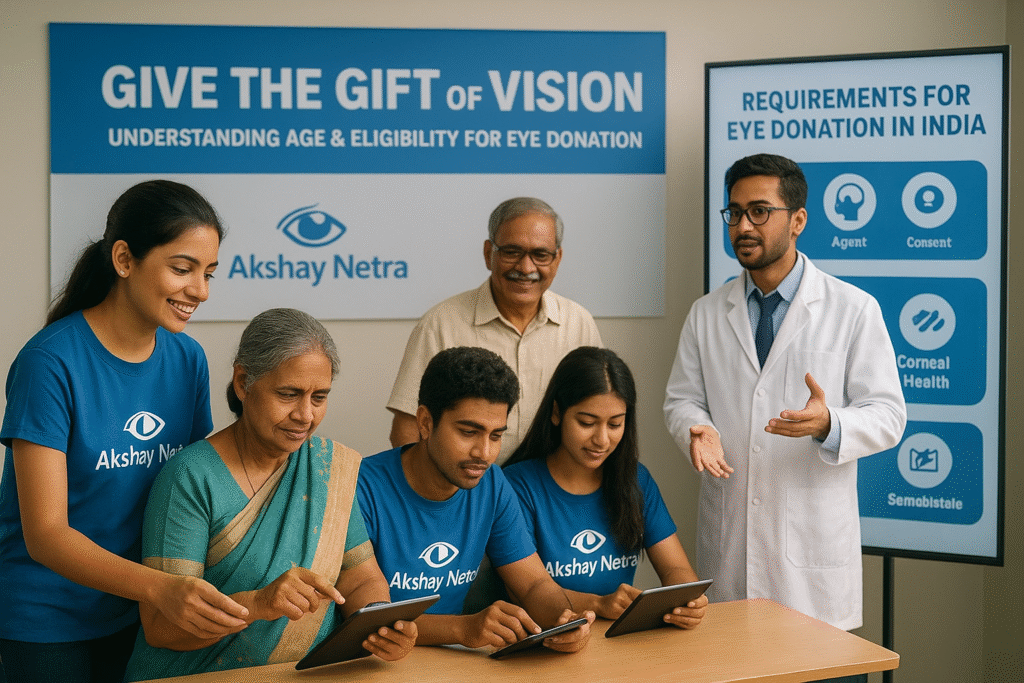
The requirements for eye donation depend on several factors like age, health condition, and consent. Anyone, regardless of gender, religion, or background, can pledge their eyes. The only important factor is the health of the cornea at the time of donation. Generally, individuals from newborns to those up to 75 years old are considered eligible if the eyes are healthy.
Even people with poor eyesight, cataracts, or those wearing glasses can donate. Akshay Netra ensures that every eye is properly evaluated and used to restore vision to those in need. This inclusive approach helps spread awareness and encourages every person to take part in a life-changing cause.
What Are the Eye Donation Eligibility Criteria in India?
The rules for eye donation in India are guided by national medical guidelines and ethical practices. Anyone can pledge their eyes, but the corneal tissue must be healthy and suitable for transplantation. Donors should ideally not have contagious diseases like HIV, Hepatitis, or sepsis.
Even individuals with diabetes or hypertension can donate if the cornea remains clear. The pledge process is simple and can be completed through Akshay Netra.
Awareness about the rules for eye donation in India ensures transparency and motivates more people to become donors. It helps families and individuals make informed choices that can save someone’s sight.
Why Understanding Age & Eligibility for Eye Donation Is Important
Understanding the criteria for donating eyes is crucial because it helps remove myths that stop people from pledging. Many think only young or healthy individuals can donate, which is not true. In fact, corneas from older donors are often equally effective in restoring vision.
By learning about real eligibility facts, families can make quicker decisions during the crucial hours after death. Akshay Netra works to educate communities about these truths. This awareness empowers society to give the priceless gift of vision and hope.
When Should You Check the Requirements for Eye Donation in India?
It is always good to understand the eye donation eligibility criteria in India early in life. Knowing the rules and conditions beforehand allows individuals to register with confidence. It also helps family members understand the procedures involved in case of a donor’s death.
Hospitals and NGOs Akshay Netra have made registration simple through online pledge forms. Checking eligibility in advance makes the process smooth and ensures timely donation. It also reduces confusion during emotional moments, helping families make decisions faster.
Benefits of Knowing Your Eye Donation Qualification
Knowing your age & eligibility for eye donation has emotional and social benefits. It removes misconceptions, making more people come forward to donate. It helps society understand that every pair of eyes can make a difference, regardless of age or background.
Awareness also promotes planning ahead, so that one’s final act can restore light to another person’s life. Akshay Netra continues to empower people with correct information so that no willing donor is held back by myths. The more we know, the more lives we can transform.
10 Pro Tips for Smooth and Impactful Eye Donation
- Pledge Early: Register your consent online at Akshay Netra to make the process official.
- Inform Family: Make sure your loved ones know about your decision; they will need to confirm the donation later.
- Keep Medical Records Updated: This helps assess corneal health faster during donation.
- Avoid Delay After Death: Eyes should ideally be collected within 6 hours after passing for best results.
- Contact Eye Banks Immediately: Save the nearest eye bank contact in your phone or share it with family.
- Stay Informed: Keep checking updates about eye donation eligibility criteria in India from trusted sources.
- Promote Awareness: Encourage others to pledge by sharing real stories and facts.
- Participate in Events: Join Akshay Netra campaigns to spread awareness and inspire more pledges.
- Understand Medical Exclusions: Learn about conditions that prevent donation, like certain infections.
- Keep Hope Alive: Even if you can’t donate eyes, you can still inspire others to become donors through your story.
FAQs
1. What is the minimum and maximum age & eligibility for eye donation?
Anyone from newborns to 75 years old can donate, depending on corneal health. There is no fixed upper limit if the tissue is in good condition. Always check with Akshay Netra for guidance.
2. What are the basic eye donation eligibility criteria in India?
Healthy corneas are essential for successful transplantation. Donors should not have transmissible diseases or infections. Conditions like poor eyesight or cataracts are not barriers to donation.
3. Can a person with diabetes or hypertension donate eyes?
Yes, they can, as long as the cornea is healthy. These conditions do not automatically disqualify someone from donating.
4. How can I register for eye donation with Akshay Netra?
You can visit Akshay Netra and fill out the simple online pledge form. It takes only a few minutes to make a lifetime impact.
5. Why is awareness about eligibility important?
Because it removes myths and motivates more people to donate. When families know the rules, they act faster and help restore vision to others.
Conclusion
Understanding age & eligibility for eye donation and knowing the eye donation eligibility criteria in India are the first steps toward saving lives. Anyone, regardless of age or background, can give the gift of sight. By learning about these simple criteria, individuals can make informed and compassionate choices.
Akshay Netra continues to educate communities and simplify the donation process. When more people understand the facts, eye donation becomes a movement of hope, dignity, and love that lights up countless lives.
