



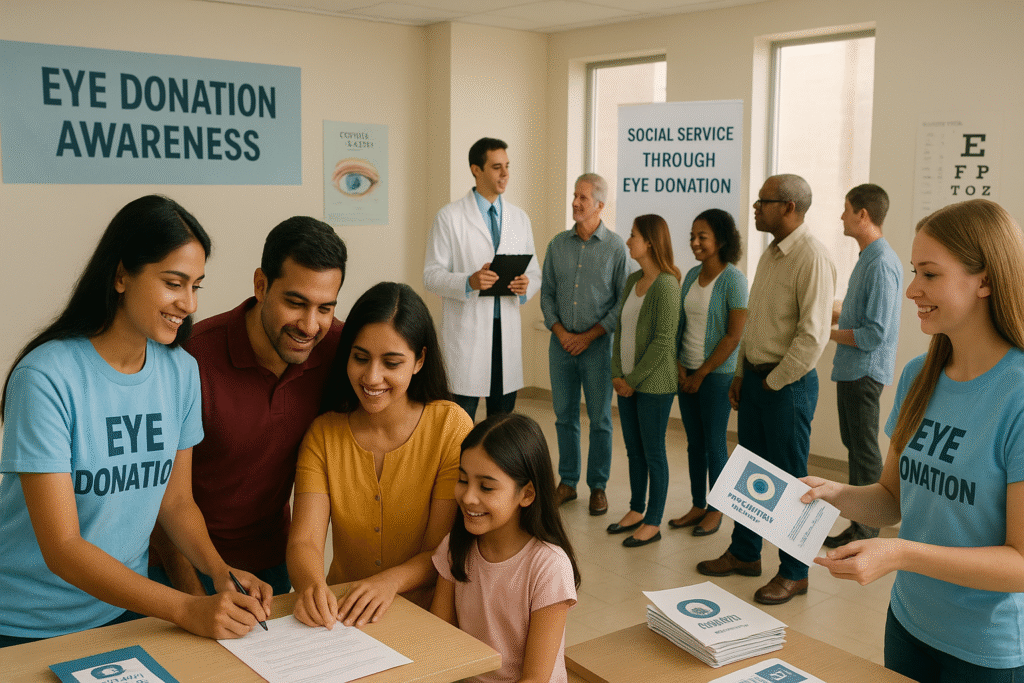
Eye donation as an act of social service is a powerful way to give back to society and transform lives. It is not just a medical procedure but a compassionate gesture that allows individuals to help those suffering from blindness. By pledging to donate eyes, one can contribute to a greater social cause, offering hope and vision to people in need. At Akshay Netra, the focus is on spreading awareness about this noble act and encouraging people to see eye donation as a vital form of social service.
Table of Contents
What is eye donation as an act of social service?
Eye donation is a selfless act of giving your eyes after death for the treatment of patients with corneal blindness. It reflects social responsibility and empathy. By donating eyes, a person ensures that someone else can regain the precious gift of sight. Contributing eyes for social welfare improves the quality of life of recipients, strengthens community engagement, and nurtures a culture of care. Social service through eye donation further amplifies the impact by promoting awareness and encouraging more people to participate. Akshay Netra actively educates people about these benefits to increase participation in eye donation initiatives. This act not only restores vision but also inspires others in the community to embrace acts of kindness. Every pledge made helps build a society where compassion and social responsibility are valued.
Benefits of social service through eye donation
Engaging in eye donation for social good has multiple advantages. It allows families to make a meaningful contribution to society, promotes awareness about vision-related health issues, and inspires younger generations to embrace acts of kindness. The emotional satisfaction of knowing that one’s contribution can change lives is unmatched. Contributing eyes for the welfare of society also supports medical advancements by providing tissues for research and corneal transplants, making it a practical and compassionate contribution to humanity.
How does eye donation as an act of social service impact communities?
Communities benefit greatly when members participate in eye donation for social welfare. Awareness campaigns, workshops, and donation pledges create a ripple effect, encouraging more people to register as donors. Schools, colleges, and workplaces can play a significant role in promoting eye donation as a meaningful social responsibility. By engaging in this act, communities can collectively reduce the incidence of preventable blindness and foster stronger bonds of empathy among individuals. You can learn more about organizing such initiatives at Akshay Netra. This effort not only transforms lives but also inspires a culture of compassion that extends beyond the act of donation itself. Every small initiative helps build a society committed to helping those in need.
Who Can Participate in Social service through eye donation?
Anyone can contribute to promoting community welfare through eye donation, regardless of age, gender, or profession. Individuals can pledge their eyes, while families can support the cause by educating others about its importance. Healthcare professionals, educators, and volunteers play a vital role in spreading awareness and organizing donation drives. Every small effort counts and encourages more people to see eye donation as a noble social responsibility. To take part, visit Akshay Netra for guidance and resources.
10 Pro Tips
- Educate your community: Conduct seminars and workshops to highlight the importance of eye donation. Encourage attendees to sign up for donor pledges during these events.
- Lead by example: Register yourself as a donor to inspire others. Share your pledge on social media or in your community to motivate friends and family.
- Use social media: Share stories of recipients to raise awareness. Create short videos or posts explaining how eye donation transforms lives.
- Collaborate with schools: Include eye donation topics in educational programs. Organize student activities like essay competitions or awareness rallies to engage them further.
- Engage local influencers: Motivational figures can encourage wider participation. Ask them to host webinars or community events to reach a larger audience.
- Organize donation camps: Partner with hospitals to simplify the process. Ensure proper guidance and information is available for families during the camp.
- Provide clear information: Dispel myths about eye donation for better understanding. Distribute pamphlets and brochures that answer common questions about the process.
- Support families of donors: Appreciate their contribution to encourage more pledges. Share their stories in newsletters or community platforms to inspire others.
- Track success stories: Highlight the impact of donations in your community. Publish these stories on social media and local newspapers to increase awareness.
- Join hands with organizations: Work with Akshay Netra for broader outreach. Participate in their campaigns and training programs to maximize your impact.
FAQs
1. What is the significance of eye donation as an act of social service?
It is a selfless contribution that allows the blind to regain sight. This act strengthens social responsibility and helps build compassionate communities. Eye donation changes lives, offering hope and vision to those in need.
2. How can I contribute to social service through eye donation?
You can pledge your eyes during your lifetime or encourage family members to do so. Participation in awareness drives and supporting donation campaigns also counts as meaningful contributions.
3. Can anyone donate their eyes?
Yes, anyone above the age of 18 can pledge to donate their eyes. Certain health conditions may restrict eligibility, but most people can still participate.
4. How soon should eyes be donated after death?
Eyes need to be donated within 4 to 6 hours after death for the best chances of successful transplantation. Quick action ensures the tissue remains viable.
5. Does eye donation affect funeral rituals?
No, eye donation does not interfere with traditional rituals. The process is handled with respect and care, ensuring families can proceed as usual.
Conclusion
In conclusion, eye donation as an act of social service is a compassionate and transformative gesture that benefits individuals, families, and society. Participating in social service through eye donation allows communities to address blindness, promote awareness, and foster empathy. By pledging eyes, supporting campaigns, and educating others, every individual can make a meaningful difference. Akshay Netra makes it easier to take part in this life-changing initiative. Remember, a small step toward eye donation can lead to a lifetime of vision and hope for someone in need.
