


Eye donation education programs play a vital role in shaping awareness, compassion, and community responsibility. At Akshay Netra, these programs are designed to educate students, families, and local groups about the significance of pledging eyes to restore sight. With growing blindness cases in India, understanding the importance of such initiatives is not just informative but life-changing.
Table of Contents
What Are Eye Donation Education Programs?
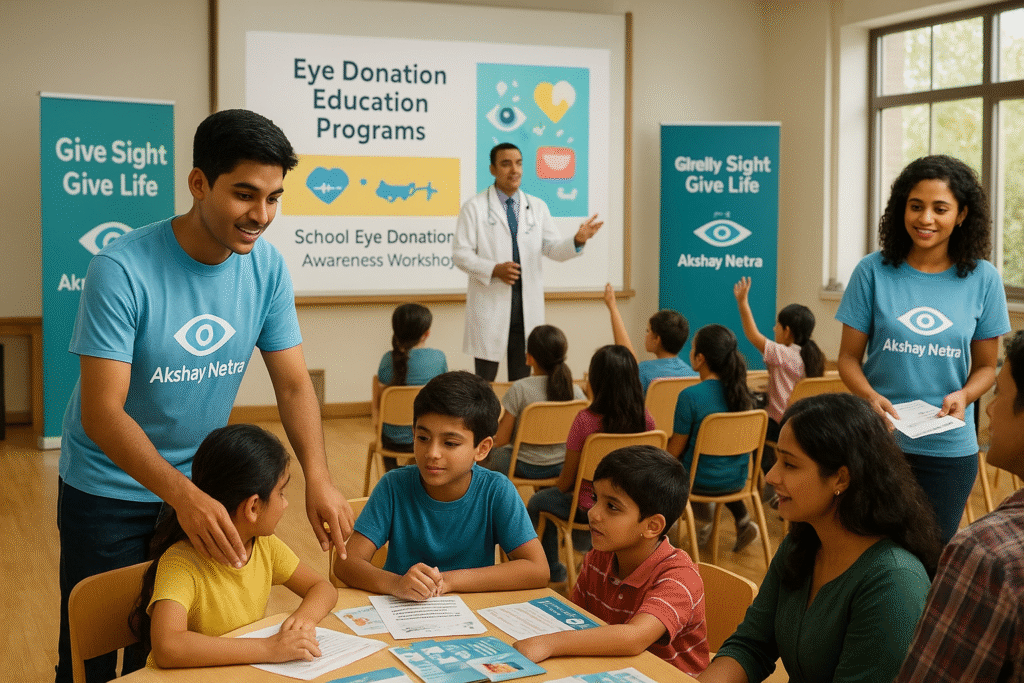
Awareness initiatives on eye donation are structured programs aimed at spreading knowledge about the value and process of donating eyes. These programs often take place in schools, colleges, and communities, helping people understand how one donor can bring light to two lives. The focus is on removing myths, inspiring youth, and promoting empathy. Through interactive workshops, visuals, and expert talks, participants learn how simple steps can make a big difference. At Akshay Netra, such efforts are part of an ongoing mission to build a world where sight is accessible to everyone. These initiatives also encourage community leaders and educators to take an active role in promoting awareness. With collective effort and consistent education, the message of eye donation can reach every corner of society.
Why Are School Eye Donation Awareness Workshops So Important?
Educational workshops on eye donation serve as the foundation of community learning and change. Schools are ideal platforms for cultivating empathy among young minds. When children are taught the concept of giving sight, they influence their families and communities. These workshops include storytelling sessions, live talks by eye specialists, and engaging activities that encourage participation. The early exposure ensures that the idea of eye donation becomes a lifelong value. This is why Akshay Netra regularly conducts such programs to create a ripple effect of awareness across generations.
Who Benefits from Eye Donation Education Programs?
The benefits of dedicated eye donation awareness initiatives extend beyond recipients. Donors and their families experience the satisfaction of transforming lives. Medical institutions gain access to more corneas for transplants, reducing wait times for the visually impaired. Communities benefit as empathy and social responsibility grow stronger. For young students, these programs build a foundation of humanitarian values, motivating them to lead future awareness drives. Overall, such education cultivates a culture where helping others becomes a shared responsibility.
How Do School Eye Donation Awareness Workshops Create Impact?
Educational eye donation workshops not only educate but also motivate active participation. These sessions are designed to make learning engaging, interactive, and emotionally impactful. Teachers and health educators work closely with Akshay Netra to organize talks, pledge drives, and community awareness events. Students are encouraged to share the message of eye donation with their families, multiplying the reach of awareness. Through creative activities like art competitions, storytelling sessions, and student-led campaigns, schools become dynamic centers of change. Early exposure helps nurture a culture of empathy and responsibility. By fostering curiosity and compassion in young minds, these workshops ensure that the message of giving sight continues to spread across generations.
Key Advantages of Comprehensive Eye Donation Awareness Initiatives
One significant advantage of well-planned eye donation awareness initiatives is their ability to bridge knowledge gaps. Many people hesitate to pledge their eyes due to myths or lack of understanding. These initiatives clarify medical facts, explain the safety of the procedure, and highlight the profound social impact of donation. They also guide people on how pledging can be done easily through Akshay Netra. By breaking taboos and encouraging open conversations, these efforts help normalize the idea of donation and inspire a collective sense of purpose.
10 Pro Tips
- Start Early: Introduce eye donation education in schools to build long-term understanding.
- Use Visuals: Posters and short videos are powerful tools to make complex ideas relatable.
- Involve Families: Encourage students to talk about donation with their parents at home.
- Invite Experts: Host talks by ophthalmologists to clarify doubts and inspire action.
- Celebrate Awareness Days: Use events like Eye Donation Fortnight to organize special workshops.
- Use Real Stories: Share true experiences of donors and recipients to make learning emotional.
- Collaborate Locally: Partner with local NGOs or hospitals for authentic knowledge-sharing.
- Include Pledge Forms: Always provide accessible pledge forms through Akshay Netra
- Reward Participation: Recognize students and teachers who actively promote awareness.
- Track Progress: Collect feedback from participants to measure growth and refine future workshops.
Each of these tips ensures that awareness efforts not only inform but also motivate lasting social impact.
When Should Educational Eye Donation Workshops Be Conducted?
School eye donation awareness workshops should ideally be conducted throughout the academic year. However, organizing them during health weeks, World Sight Day, or Eye Donation Fortnight maximizes participation. Students are more receptive during these themed periods, making it easier to combine lessons with interactive campaigns. Schools can also schedule them in collaboration with community health events, allowing families to join. The consistency of such workshops ensures that awareness becomes a continuous effort rather than a one-time event.
FAQs
1. What is the main goal of eye donation education programs?
The main goal is to educate individuals about the importance and process of eye donation. These programs aim to dispel myths and inspire participation. By spreading awareness, they help increase corneal donations nationwide.
2. How do school eye donation awareness workshops influence young minds?
These workshops help students understand compassion and responsibility. By learning early, children encourage their families to pledge. They grow into socially aware adults who continue to spread awareness.
3. How can I participate in an awareness event near me?
You can join local awareness campaigns or educational drives through community centers or schools. Visit Akshay Netra for updates and ways to get involved.
4. Are there age limits for eye donation?
Anyone can pledge to donate their eyes, regardless of age. The final suitability is determined by medical experts after donation.
5. How do awareness programs help in reducing blindness?
Awareness programs encourage more people to pledge, increasing corneal availability for transplants. The more people understand, the fewer lives remain in darkness.
Conclusion
In conclusion, eye donation education programs and school eye donation awareness workshops are essential to building a compassionate, informed society. They empower communities to understand, pledge, and act. Through awareness, myths are erased, and hope is restored. Akshay Netra continues to lead the way by providing resources, guidance, and opportunities for everyone to contribute. By participating in these programs, we all take a meaningful step toward creating a future where blindness can truly be overcome.
Together, we can turn awareness into action and ensure that no one is left in darkness due to lack of vision. Each pledge is not just a donation it is a promise of light, hope, and humanity.
