



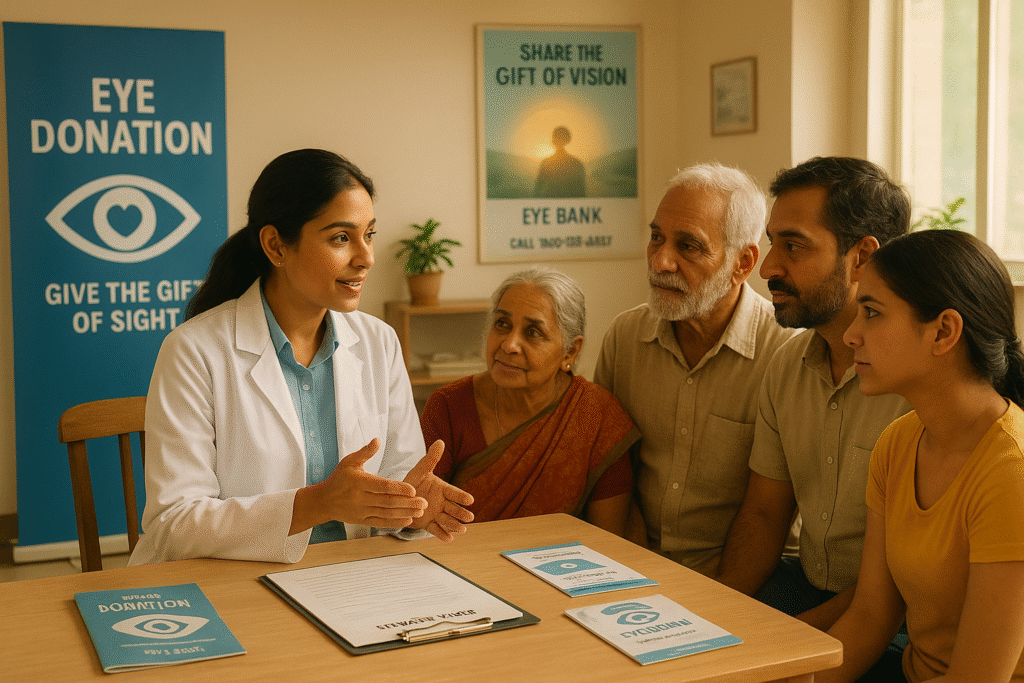
Eye donation India has been a subject that extracts both compassion and awareness for humanity for decades. At the very heart of this noble cause lies the possibility of giving someone the priceless gift of sight. It plays a major role in reducing corneal blindness, which affects millions of people across the country. With the right awareness and understanding, more people can come forward and pledge their eyes, creating a life-changing impact for those who need it the most.
Akshay Netra has been working to spread awareness and provide clarity about eye donation, making it easier for people to take this important step. This article will guide you through the process, benefits, tips, and commonly asked questions so you can make an informed choice.
Table of Contents
What is Eye Donation in India and Why Does it Matter?
Restoring sight for those suffering from corneal blindness begins with the voluntary act of donating one’s eyes. This process involves pledging and donating eyes after death, offering a chance for people to regain vision. Corneal blindness is one of the leading causes of blindness in the country, and transplantation remains the only proven cure.
Through this process, individuals can leave behind a lasting legacy by giving light to two people. By spreading awareness and breaking myths, Akshay Netra is ensuring that people realise how accessible and impactful this process truly is.
How Does the Eye Donation Process in India Work?
The procedure for donating eyes is simple but needs prompt action. After a person passes away, family members should contact the nearest eye bank or hospital programme immediately. Trained professionals then carefully retrieve the cornea within six hours to ensure it can be successfully transplanted.
The collected corneal tissue is then preserved and later transplanted into recipients who are registered and waiting. It is important to note that donating eyes does not disfigure the face and does not interfere with funeral rites.
Who Can Benefit From Eye Donation India?
Millions of people suffer from corneal blindness caused by injury, infection, or disease. For them, corneal transplantation offers the only chance of restoring vision. Donating eyes helps children, adults, and the elderly alike, bridging the gap between blindness and a brighter life.
From students aspiring to study without limitations to working professionals whose jobs require clear eyesight, the benefits spread across generations. By pledging eyes, you give opportunities, hope, and a second chance at life. Akshay Netra emphasises the life-changing role of donors and families in making this possible.
What Are the Advantages of Donating Eyes in India?
The eye donation process in India holds several advantages that extend beyond the recipient. It not only restores sight but also reduces the burden on families and the healthcare system. The act inspires communities to take part in awareness programs and strengthens the culture of giving.
Furthermore, eye donation builds unity by connecting donors, recipients, families, and volunteers. Each act creates a ripple effect, encouraging others to contribute. With increasing pledges, the waiting time for recipients can be reduced significantly, ensuring more lives are transformed.
10 Pro Tips
- Inform Your Family About Your Wish
Always let your family know you want to donate your eyes. Being aware ensures your wish is honoured without confusion or delay. - Register as an Eye Donor
Make your pledge official by registering at Akshay Netra. Official registration simplifies the process for your family and eye banks. - Keep Eye Bank Contacts Handy
Maintain emergency contact details of local eye banks. Quick access ensures timely donation after passing. - Spread Awareness on Social Media
Share facts about eye donation online. Your posts can reach friends and family who may not know the importance of eye donation. - Educate Children Early
Teach your children about the value of donating eyes. Instilling awareness in the next generation promotes a culture of giving. - Bust Common Myths
Explain that eye donation does not affect appearance after death. Clearing misconceptions encourages more people to pledge their eyes. - Encourage Awareness Sessions
Motivate workplaces and schools to host eye donation sessions. Group education initiatives can significantly increase donor registrations. - Join Community Campaigns as a Volunteer
Actively participating in campaigns inspires others and strengthens local outreach efforts. - Support Eye Banks in Other Ways
If you cannot donate, support eye banks with your time or resources. Even non-donors can help maintain operations or fund essential equipment. - Share Success Stories
Inspire others by highlighting real-life examples of restored vision through eye donation. Emotional stories motivate more people to become donors.
Each of these tips creates a culture of awareness, ensuring more people understand the significance of this life-changing act.
Why Is the Eye Donation Process in India Still Facing Barriers?
Despite progress, donating eyes in India still faces several challenges. Lack of awareness, cultural beliefs, and myths prevent many families from stepping forward. Some fear disfigurement of the body, while others are unaware of the urgency needed to complete the donation successfully. Another barrier is limited knowledge of eye banks and how to contact them quickly. Akshay Netra is addressing these issues through awareness drives, campaigns, and guidance to families, helping them take action confidently.
FAQs
1. What is the importance of Eye Donation India?
Eye donation in India is vital as it helps restore vision for millions suffering from corneal blindness. One donor can give sight to two people, creating a lasting impact.
2. How does the eye donation process in India actually happen?
After death, family members notify an eye bank, and corneas are retrieved within six hours. The preserved cornea is then transplanted to restore vision in patients.
3. Who is eligible to donate eyes?
Anyone, regardless of age, gender, or medical history, can pledge their eyes. Only those with serious infections or communicable diseases may be restricted.
4. Does eye donation affect funeral rituals?
No, eye donation does not delay or interfere with funeral practices. The procedure is quick, safe, and respectful.
5. How can families get involved in eye donation awareness?
Families can pledge together, spread awareness in communities, and support campaigns organised by Akshay Netra.
Conclusion
In conclusion, eye donation India has the power to change lives by restoring vision and reducing blindness across the nation. The eye donation process in India makes it possible for ordinary people to leave behind an extraordinary gift. By pledging eyes, spreading awareness, and supporting Akshay Netra, you can contribute to building a future where fewer people live in darkness. The act of donating eyes is more than a medical process. It is an act of humanity, compassion, and legacy. By choosing to pledge today, you can be the light in someone’s tomorrow.
